
In capital sentencing, the jury’s task is not only to decide whether the defendant committed a terrible crime. It must decide whether that person should live or die. That decision requires the full story.
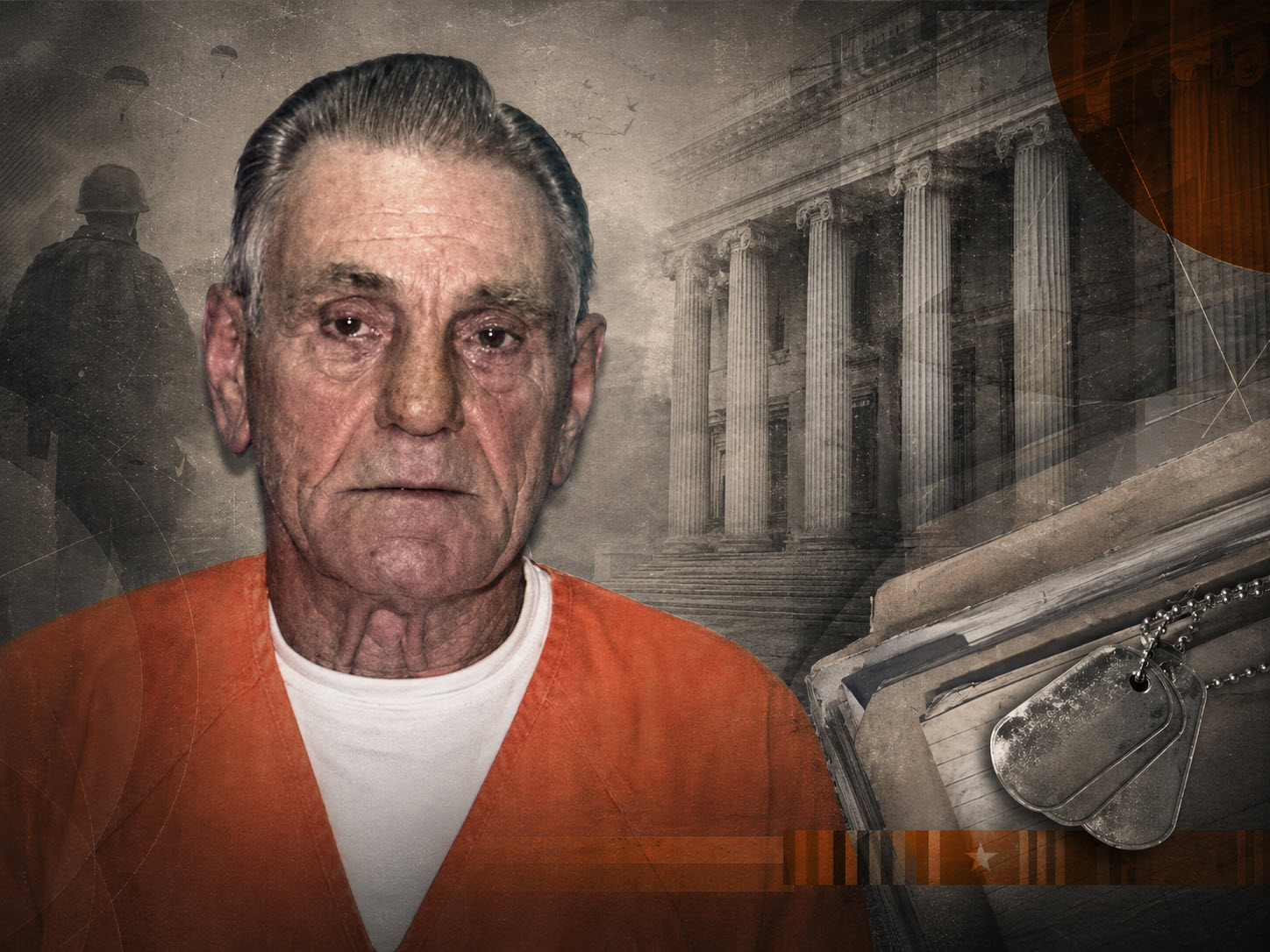
George Porter was sentenced to death in Florida after his lawyer failed to present important mitigation evidence about his life. Porter’s sentencing jury did not hear key evidence about his abusive childhood, his military service, his combat experience in the Korean War, and the trauma he carried afterward. The U.S. Supreme Court later held that this failure amounted to prejudicial ineffective assistance of counsel and granted Porter relief from his death sentence.
Our research asks an empirical question: How much did the omitted mitigation evidence affect the probability that Porter would be sentenced to death?
Measuring the Effect of the Missing Evidence
The Porter case is an example of a larger problem in post-conviction review. Courts often must decide whether omitted evidence created a “reasonable probability” of a different result. But the evidence was never presented to the jury, so the court cannot observe how jurors would have reacted to it.
The research addresses that problem with a randomized study. Respondents were assigned to review either the limited sentencing case actually presented to Porter’s jury or a hypothetical fair sentencing case that included the omitted mitigation evidence. The analysis then used jury-pool preferences and a deliberation model to estimate the probability of a death sentence in each condition.
The result was substantial. The omitted mitigation evidence increased the estimated probability of a death sentence by about 30 percentage points. In other words, the problem was not merely that Porter’s lawyer performed poorly. The missing evidence likely changed the sentencing outcome.
This case study was conducted in part to assess whether the empirical method calibrates with legal benchmarks. Porter is a useful test case because the U.S. Supreme Court had already concluded that his sentencing was constitutionally unreliable. The analysis reached the same conclusion. In that sense, the Court got it right. But Porter spent roughly 21 years on death row before that correction occurred. There may be other defendants like Porter whose trials or sentencing hearings were distorted by serious omissions, but whose claims have not yet been evaluated with a method capable of measuring the likely effect.
Why This Case Matters Beyond Porter
Mitigation evidence does not excuse murder or diminish the victims’ lives. But in a capital sentencing hearing, it can change how jurors understand the defendant’s life, culpability, trauma, and moral responsibility. Jurors cannot weigh what they never hear.
That is why ineffective assistance of counsel is not a technical issue. In a capital case, a lawyer’s failure to investigate and present mitigating evidence can alter the balance between life and death. The Porter case shows how empirical analysis can help courts, lawyers, and the public understand whether that kind of omission likely affected the outcome.
This case study is an example of the practical solutions developed by Fair Trial Analysis. The organization uses jury-pool surveys, randomized experiments, and statistical models to estimate the effect of trial errors and omissions. The study shows how empirical trial-error analysis can help evaluate prejudice, harmless error, and the probability of a different outcome.
The larger point is simple: fairness should be measured, not assumed.
[Download the Executive Summary: Measuring the Effect of Ineffective Assistance of Counsel in Florida v. George Porter]