
Research That Measures Trial Fairness
Fair Trial Analysis addresses on one of criminal law’s hardest questions: whether an error, omission, or procedure created a meaningful risk of an unjust outcome.
Our research combines legal doctrine, jury decision-making, and quantitative analysis to make questions of trial fairness more measurable, more transparent, and more useful in practice. Rather than treating fairness as a matter of intuition alone, Fair Trial Analysis develops frameworks that help courts, litigators, researchers, and public-interest organizations evaluate whether trial conditions likely affected outcomes.
FEATURED RESEARCH
Measuring Fairness
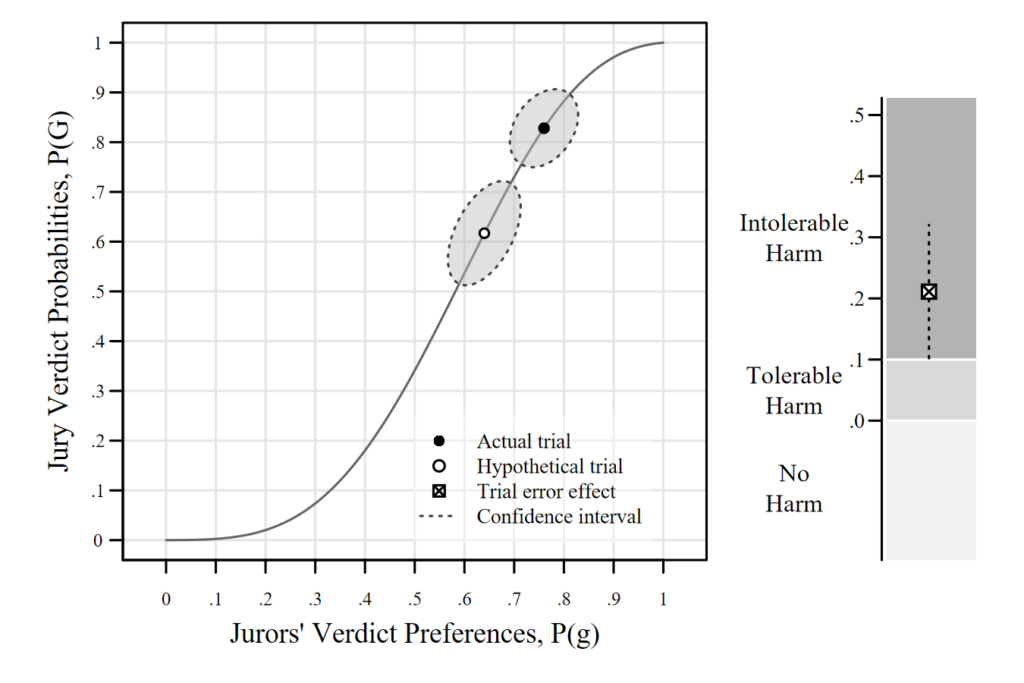
Measuring Fairness is the flagship research project of Fair Trial Analysis. It presents a practical framework for estimating whether a criminal trial created a reasonable probability of a different outcome. The article connects jury-pool preferences, jury deliberation, and verdict probabilities in a way that allows fairness questions to be analyzed with greater rigor and precision. It also demonstrates the method on real criminal cases involving ineffective assistance of counsel, coerced confessions, improper prosecutorial arguments, and flawed jury instructions.

Why This Research Matters
Measures fairness directly
Fair Trial Analysis focuses on the effect of trial conditions on case outcomes. The goal is not simply to identify errors, but to evaluate whether they mattered.
Connects law and science
Our research translates legal standards such as prejudice, harmlessness, and reasonable probability into empirically testable questions.
Built for real cases
This work is designed not only for scholarship, but for use in litigation, public-interest work, and court-facing analysis.
Jury Deliberation Model
See how initial jury preferences can develop into final verdicts through deliberation. This animation illustrates the relationship between juror preferences and jury outcomes.
Survey Research Glossary
Review the key terms and concepts that support this research, including sampling, randomization, inference, and other core ideas used in empirical analysis.
ADDITIONAL REPORTS
A Scientific Framework for Analyzing the Harmfulness of Trial Errors
This foundational article explains why courts need more rigorous ways to evaluate whether trial errors were harmful or harmless. It outlines a scientific framework for testing claims about the effect of trial errors and explains why subjective judicial estimates are often speculative.
If the Jury Only Knew: The Effect of Omitted Mitigation Evidence on the Probability of a Death Sentence
This report examines omitted mitigation evidence and the probability of a death sentence. It identifies critical flaws in past efforts to substantiate harm and shows how missing information in a capital case can materially affect sentencing outcomes.
Evaluating Death Sentencing Procedures: Fairness, Disparities, and Constitutional Limits
This research analyzes how structural sentencing rules can alter the probability of a death sentence. It focuses on procedural variation across states and asks when those differences become constitutionally significant.
Outdated and Unconstitutional: Rethinking Duration of Residency Requirements for Jury Service
This article examines one-year residency requirements for jury service and argues that categorical exclusions of new residents undermine the representativeness and legitimacy of jury pools.
The Unconstitutionality of Capital Punishment for Murder
This working paper argues that capital punishment is unconstitutional for the crime of murder, offering a narrower and more institutionally plausible path to practical abolition. It combines evolving-standards analysis with originalist reasoning to explain why death sentences for murder no longer fit constitutional limits.
Markov Chain Models of Jury Deliberation with Ordered Verdict Options
This working paper develops a formal model of jury deliberation that translates initial juror preferences into final verdict probabilities. It helps explain how deliberation affects outcomes in cases involving guilty-not guilty choices, lesser-included offenses, and other ordered verdict options.
Research Themes
Fair Trial Analysis research is organized around a set of recurring questions about fairness, reliability, and criminal adjudication.
- Trial Fairness
- Harmless Error and Prejudice
- Jury Decision-Making
- Capital Sentencing
- Jury Composition
- Empirical Legal Analysis
Fair Trial Analysis treats research as a practical tool for improving how the legal system evaluates fairness in criminal cases. Its work connects legal standards with careful empirical analysis so that questions about trial errors, omissions, and procedures can be assessed with greater rigor, clarity, and discipline. This reflects the organization’s commitment to independence, problem solving, and respect for a criminal justice system that should be both fair and effective.